
 LabelLogic Live
 Planglow Account Login


Q&A with Industry Professional Brogan Dorgan
Dec 8, 2025
Multi-Site Manager for Catering Services, Brogan Dorgan, has been an integral member of the Falmouth Exeter (FX)Plus team for almost a decade. FXPlus oversees and delivers campus services on behalf of Falmouth University and the University of Exeter, encompassing a fleet of bars and eateries, daily transactions regularly peak at 7.5K. To describe FXPlus as a ‘fast paced working environment’ borders on understatement: If there were a catering Olympics, Brogan would be gold all the way. Spinning plates from dawn till dusk, she somehow found time to sandwich-in a chat with us. Here, in part one of a two part series, Brogan discusses how she got into the industry, working in a university setting and staying ahead of the curve - including why FXPlus is using our new compostable and recyclable bowls despite Cornwall not yet offering waste collections for these products. Brogan, it’s over to you…
OK first up, can you tell us a bit about your background?
I’ve worked in the catering and hospitality industry for over 15 years. My journey began while I was a student, at an independent wood-fired pizza shop in Falmouth called Belly Timber. There, I was involved in every step of the process—making fresh dough, preparing pizzas, and cooking them in a traditional wood-fired oven. It was a hands-on, fast-paced environment that gave me a real appreciation for quality, consistency, and teamwork.
Later, while working at Liverpool Hope University, I managed and ran a pizza kitchen that was linked to the student bar. I was responsible for making fresh dough and pasta dishes, and cooking pizzas using a large gas pizza oven. This gave me valuable experience in kitchen management and service delivery in a high-volume setting.
I relocated back to Cornwall and joined FXPlus in 2016, I progressed through a variety of roles—from Front of House Team Member to Hospitality Supervisor, then Hospitality Manager, and then Multi-Site Manager in 2020. This has given me a deep understanding of both front-line service and strategic operational management across multiple sites. It’s been a rewarding journey that’s allowed me to grow professionally while staying connected to the fast-paced, people-focused environment I love.
What do you love most about working in the catering and hospitality industry?
The energy and variety it brings every day. No two days are the same, and I thrive in that fast-paced, people-focused environment. I enjoy creating memorable experiences for customers, whether that’s through great food, excellent service, or a welcoming atmosphere.
I also love the sense of teamwork and the opportunity to lead and develop others. Watching team members grow in confidence and progress in their roles is incredibly rewarding. On the operational side, I enjoy the challenge of problem-solving, improving systems, and driving commercial success. It’s a dynamic industry that keeps me constantly learning and evolving—and that’s what keeps me passionate about it.

How have you seen the industry change?
We’ve seen an increased emphasis on hygiene, safety, and contactless service; a greater use of digital tools for ordering, communication, and feedback; and more flexible and responsive service models, shaped by rapidly changing customer expectations. These changes align with broader trends in customer experience, where organisations have had to become more agile, empathetic, and digitally enabled to meet evolving needs.
Who are your typical customers?
Our customer base is diverse and dynamic, reflecting the vibrant community we serve. We cater to a wide range of individuals including undergraduate and postgraduate students, service and support staff, academic and research personnel, visiting external speakers, event delegates, and members of the general public. This variety ensures our services remain inclusive, adaptable, and responsive to the needs of all who engage with our catering and retail outlets.
Our customer base shifts significantly throughout the year. During term time, the majority of our customers are students, alongside university staff and faculty. However, in the summer months, we see a notable change as student numbers decrease and our accommodation facilities are repurposed for holiday use. This brings in a different demographic, including families, tourists, and large school or youth groups, all of whom we cater for. These seasonal fluctuations require us to adapt our services and offerings to meet the changing needs of our diverse customer base.
What’s the FXPlus philosophy?
We seek to put our customers at the heart of everything we do. This means: using feedback to drive continuous improvement; delivering services with professionalism, dignity, and respect; providing accurate, timely, and helpful information; and maintaining high standards through clear service commitments - such as resolving incidents within agreed timeframes and offering multi-channel support.
Tell us about your signature dishes…
Our signature offerings include our ever-popular nachos and our vibrant, daily-changing street food menu. These dishes are customer favourites, known for their bold flavours, generous portions, and variety that keeps people coming back for something new each day.
How do you keep ahead of the curve with food trends and customer expectations?
We stay ahead through a combination of active engagement, continuous learning, and data-driven decision-making. Our team regularly monitors industry developments, attends food and hospitality events, and collaborates with suppliers to explore new ingredients and concepts. We also place a strong emphasis on customer feedback - gathered through surveys, social media, and direct interaction - which helps us refine our offerings and introduce fresh, relevant menu items. By staying connected to both global trends and our local community, we ensure our services remain innovative, inclusive, and responsive to the needs of our diverse customer base.
Where do you find inspiration for new food concepts or ingredients?
We draw inspiration from a wide range of sources—global food trends, seasonal produce, customer feedback, and the creativity of our culinary team. A key driver of our innovation is our Executive Head Chef, Tristan Gordon, whose exceptional experience brings a unique edge to our offerings. Tristan has worked alongside culinary legends Albert Roux and Michel Roux Jr., and has honed his craft in Michelin-starred and AA Rosette-awarded restaurants across the UK. Most recently, he led corporate and fine dining services for prestigious clients such as KPMG and HSBC Bank. His expertise and passion for food are instrumental in shaping menus that are both exciting and refined, ensuring we stay ahead of trends while delivering consistently high-quality dishes.
You were an early adopter of our new Back to Nature branded food bowls, can you tell us what made you switch to these products?
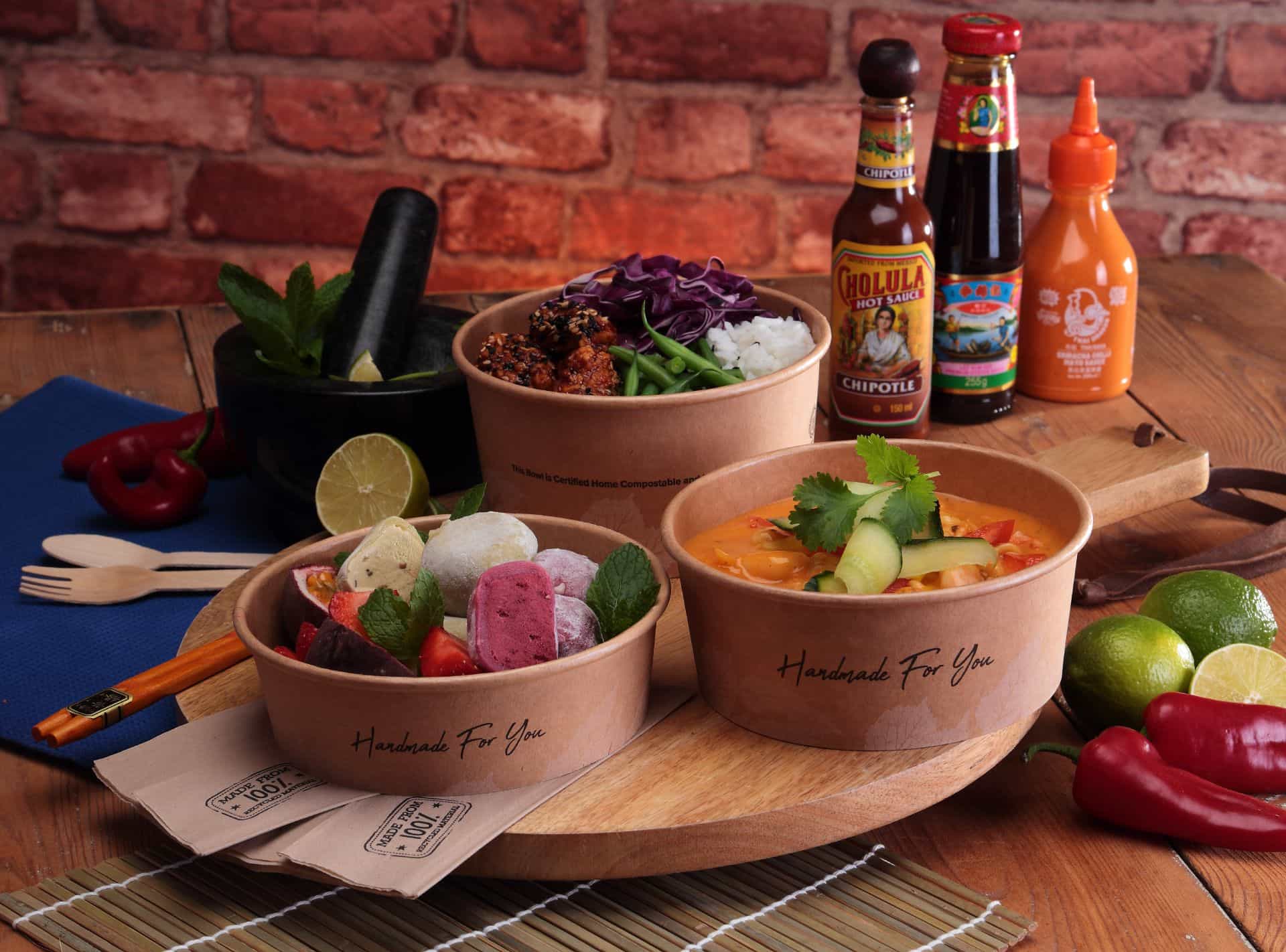
The bowls offer both style and substance and have proven to be a perfect solution for both presentation and performance - and product quality has been absolutely amazing. Visually, they’re a great fit for our brand - they have a clean, natural look that complements our aesthetic perfectly.
But beyond appearance, they’ve solved some key practical issues we were facing with our previous packaging: They are lined, which means we no longer have problems with leaking, and they maintain their structure really well. One of the biggest improvements has been around heat retention - customers used to complain that our old packaging got too hot to handle, but that’s no longer an issue. So they are incredibly reliable - they don’t leak, warp, or lose their shape, even with hot or saucy foods. That kind of consistency is exactly what we need in a busy environment, and it’s made a noticeable difference in our day-to-day operations. Honestly, I’d rate them 10 out of 10.
How do they fit with your branding and values?
They’re not only visually appealing and a great match for our brand’s aesthetic, but they also offer a much-improved customer experience. The lined interior has been a game-changer—it completely eliminates the leaking issues we used to face with our previous packaging. Plus, they don’t retain heat in the same way, which has resolved the complaints we were receiving about containers getting too hot to handle. Overall, they’ve proven to be a perfect solution for both presentation and performance.
Do you promote your use of compostable / recyclable packaging? And if so, how?
We do promote the use of compostable and recyclable packaging, but our main focus is on encouraging customers to reduce their reliance on disposables altogether. To support this, we charge a small fee of 20p for disposable items as a gentle deterrent and to raise awareness about the environmental impact. While we do provide lids for our packaging, we’ve made a conscious decision not to automatically include them, as they aren’t compostable (the lids are made from recycled plastic). Instead, we leave it up to the customer to decide whether they need one. This approach gives people the opportunity to make more sustainable choices and helps us reduce unnecessary waste.
What happens to the bowls after use?
At the moment, we don;t have access to a dedicated waste stream in Cornwall for processing compostable or recyclable disposable packaging, which is a real challenge. Despite this, we do our best to manage the waste responsibly by keeping used bowls and similar items separate in designated bins. While we can’t guarantee they’re being processed as intended due to the limitations of local infrastructure, we believe it’s important to lay the groundwork for better practices. By separating the waste, we’re ready to adapt quickly if and when the appropriate facilities become available - and in the meantime, we’re continuing to encourage customers to reduce their use of disposables altogether.
Faced with a current lack of options for waste, Brogan and the FXPlus team have taken positive action by futureproofing their practices and seeking to reduce waste overall, regaining some autonomy over an area otherwise outside of their control. In our second post in this series, Brogan delves further into the challenges caterers are now facing and the ways in which universities can approach these - stay tuned for part two!